
How to Write a Birthday Song for Your Husband That Lands (Not Cringe)
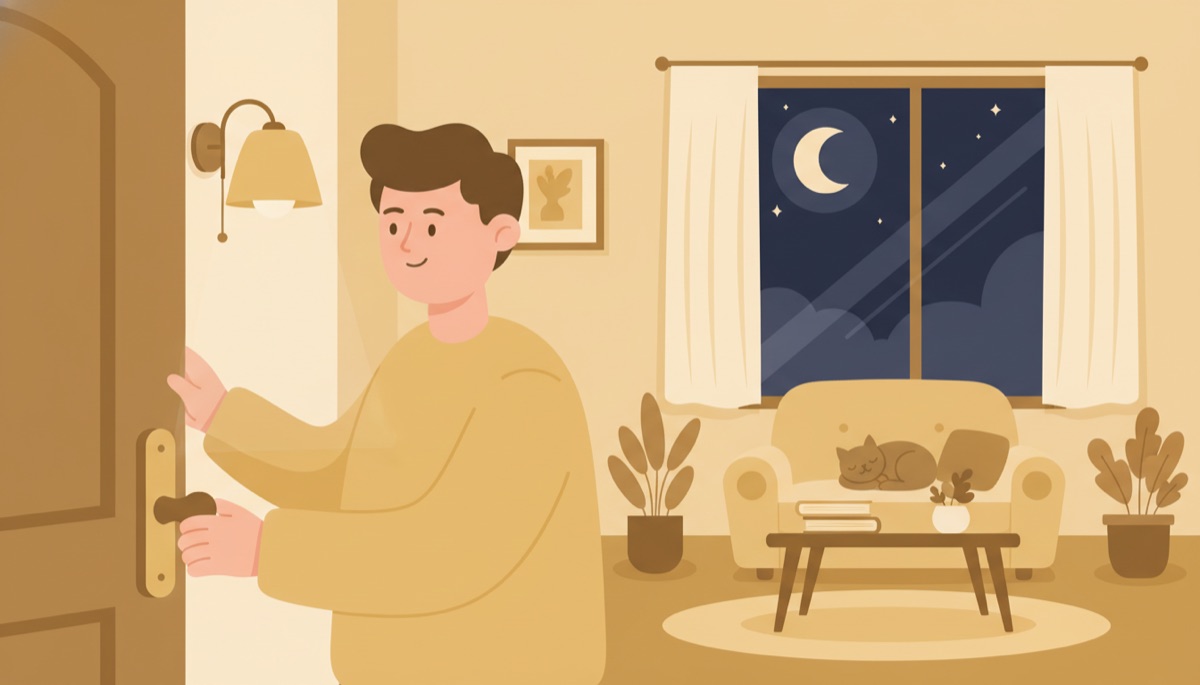
You want to do something that isn't another watch, another shirt, another thing he'll say "you didn't have to" about. A song feels right. Then you imagine actually playing it for him — the two of you on the couch, some swelling chorus calling him your soulmate, your rock, your everything — and you feel your face get warm on his behalf. The fear isn't that he won't like it. The fear is that it'll be cringe.
That fear is correct, by the way. Most songs written for husbands are cringe, and for a specific reason: they reach for huge feelings ("you complete me," "my heart beats for you") and skip the small, true stuff entirely. But there's a version that doesn't make either of you wince — and it usually comes from the least romantic-sounding place imaginable: the boring, ordinary things he does that nobody ever thanks him for.
The angle that works: thank him for the invisible stuff
Here's the move almost nobody makes. Instead of writing about how much you love him, write about the specific quiet things he carries that have become so reliable they've turned invisible.
Think about what he just handles. The car that's always somehow full of gas. The 6 a.m. alarm he never complains about. The way he stays calm on the phone with the insurance company while you're losing your mind. The light he turns off after you've fallen asleep. The fact that the scary noise downstairs is always, automatically, his job to go check.
Nobody thanks him for these. They're the floor everyone stands on, which is exactly why they go unseen — you only notice a floor when it's not there. A song that names one of these is the opposite of cringe, because it's not flattery. It's evidence. It says: I see the thing you do that you assumed I'd never noticed. That hits a married man somewhere a "you're my hero" chorus can't reach.
So before you write anything, sit with one question: what does he do, by default, that holds your life together — and that you've never actually said thank you for?
How to find his invisible load
If you draw a blank, that's normal — the whole point is that this stuff hides. Some prompts that pull it out:
- What would fall apart in the first 48 hours if he were gone?
- What does he do early in the morning, before anyone's awake to see it?
- When something breaks, what does he just quietly fix without being asked?
- What does he absorb so you don't have to — the worry, the phone call, the hard conversation?
- What's the thing he does that you only notice on the rare day he doesn't do it?
You're not looking for grand sacrifices. You're looking for the defaults. "He gets up in the dark and makes the coffee so the house smells like morning before I'm even up" is worth more than "he's my best friend and my soulmate." One could only be about him. The other could be on a mug.
Be specific, not sweeping (this is the whole anti-cringe trick)
Cringe is almost always a failure of scale. It happens when the feeling is enormous but the detail is zero. "You mean everything to me, you're my whole world" — that's a balloon with nothing inside it, and a grown man can feel the air in it immediately.
The fix isn't to feel less. It's to point the feeling at something small and exact. Watch what happens when you swap the sweeping line for the specific one:
Cringe: "David, you're my rock, my strength, the man who holds me up."Lands: "David, you checked the locks again at midnight / and never said a word about it."
Cringe: "You're my hero, my protector, my everything."Lands: "You took the early shift for fifteen winters / so the heat was on before our feet hit the floor."
Same gratitude. The first version embarrasses both of you because it's pure volume. The second one reaches him because it proves you were watching. Quiet, concrete details give big feelings somewhere safe to land. A man who'd roll his eyes at "my strength" will go quiet at "you checked the locks again."
A useful gut-check: if a line would make him squirm if you said it out loud at dinner, it'll squirm worse in a song. If it sounds like something you'd actually murmur to him, it's right.
Where to put it in the song
You don't write or arrange any of this — that part is ours. But if you want to see how your details become a song, here's the skeleton, and the honest detail that brings each part to life.
Verse 1 — one ordinary scene: a specific time, a specific small action. "Tuesday, still dark out, the kettle and your keys." Bring a moment from his real world, not adjectives.
Chorus — the line he'll remember, so it stays simple and carries the thank-you, not a pile of facts. It's where the song says the thing it's all about — that you finally see it. His name lands here if it fits naturally.
Verse 2 — the turn: from what he does to what it's quietly meant. "I used to think the quiet was just quiet / now I know it's you, making sure we're okay."
Bridge — the one line you don't usually say out loud. Often the thank-you he never got. The truest spot in the song.
Bring real, small things for these four beats — and turning them into verse, chorus and bridge is our job. You'll get something that sounds like him, not like a card.
Match the music to him, not to romance
The default for a love song is a soaring ballad, and for a husband that's often exactly the wrong call — it pushes the whole thing toward sappy before a word is sung. The music should sound like his taste, which is also your best defense against cringe.
Look at what he actually listens to. A guy who plays classic rock on Saturdays will take this far better as a warm, mid-tempo rock song than a string-soaked ballad. A country fan should get a story-song. Someone who likes hip-hop or folk or 80s synth — give him that. Matching his genre quietly tells him the song was built for him, and it keeps the production from doing the over-emotional work the lyrics are carefully avoiding.
Common mistakes that make a husband song cringe
We've looked at a lot of personal lyrics, and the ones written for husbands fail in a handful of predictable ways. Dodge these and you're most of the way there:
- The pet-name clichés. "My rock," "my hero," "my better half," "partner in crime," "my person." These feel meaningful in your head and read as wallpaper on the page — because they could be about literally anyone's husband. The second one shows up, the song stops being about him. Cut them on sight.
- Over-sweetening. Stacking "you complete me / my soulmate / my everything / my forever" doesn't double the emotion, it cancels it. Big abstract love-words are the fastest route to cringe. Trade every one of them for a single concrete thing he actually did.
- Generic instead of his. "You work so hard for us" is a true sentence and a dead lyric. What hard work? Name it. "You sat on hold with the bank for an hour on your day off" is his, and only his. Vague gratitude reads as polite; specific gratitude reads as love.
- Praising the obvious, missing the invisible. It's easy to thank him for the visible stuff — the big gift, the vacation he booked. The song gets its power from the unthanked things: the locks, the early alarm, the calm he keeps so you don't have to. Aim there.
- Burying his name. A name lands hardest in a strong position — the front of a line or the top of the chorus — and we place it there. You just give us the name (or the nickname you really use); mumbled mid-line, it loses all its weight.
- Turning it into a list. A song that recites every nice thing he's ever done ("you did this, and this, and also this") becomes an itinerary. Pick two or three invisible things and actually sit on them. Depth beats inventory.
The one thing to remember
A birthday song for your husband doesn't have to be grand to land — in fact, grand is what makes it cringe. It has to be seen. Skip the soulmate-sized words and hand him the small, unthanked thing instead: the coffee in the dark, the locks at midnight, the calm he keeps so you don't have to. Name the floor everyone's been standing on. That's the gift no store carries — proof that the invisible thing he does was never actually invisible to you.
If you haven't picked a direction yet, the overview of birthday song ideas compares funny, heartfelt, parody and original in one place — including which one survives a room full of guests.
Frequently asked questions
The detail only they would know.
SongReveal takes one real thing you want to thank him for and shapes it into a song, with a free preview before you pay. If you'd rather have help turning "he just handles it" into words that land, that's exactly what it's for.
▶ Create a Song